
Module #8: Sound in Restaurants
Module #8
Sound in Restaurants
When it comes to dining out, the ambiance of a restaurant plays a major role in the overall experience. From the lighting and decor to the menu and service, every aspect is carefully considered to create the perfect atmosphere for customers. However, one aspect that is often overlooked is the acoustics. The soundscape of a restaurant can greatly impact the customer experience and employee well-being. Poor acoustic conditions can lead to increased noise levels, making it difficult for customers to hold a conversation or enjoy their meal. It can also lead to hearing damage and fatigue for employees. We will explore the importance of acoustics in restaurants, the common acoustic challenges faced by restaurants, and the best design strategies for creating an acoustically comfortable environment.
The challenges relating to controlling the acoustics in restaurants is expansive, but the success of remedying them are often paramount to the restaurant’s success. Here are some of the common challenges restaurants face in keeping noise levels in check:

- High noise levels: Restaurants are often designed with hard surfaces like tile floors, hardwood walls, and concrete ceilings, which can reflect sound and create high noise levels.
- Echoes and reverberation: Echoes and reverberation can occur when sound waves are reflected off hard surfaces like walls, floors, and ceilings, creating a noisy and uncomfortable environment.
- Background noise: Restaurants often have multiple sources of background noise such as music, kitchen equipment, and chatter, which can make it difficult for customers and staff to hear each other.
- Outside noise: contributing noise can come from outdoor seating/patios, neighboring construction or remodeling noise, traffic and parking noise, and/or potentially being located close to a residential area.
- Speech intelligibility: Poor speech intelligibility can occur when sound is absorbed by certain materials, making it difficult for customers and staff to understand each other.
- Sound leakage: Sound leakage can occur when sound travels from one space to another, such as from the kitchen or a nearby table, creating a noisy and distracting environment.
- Low-frequency noise: Sound leakage can occur when sound travels from one space to another, such as from the kitchen or a nearby table, creating a noisy and distracting environment.
- High-frequency noise: High-frequency noise: High-frequency noise can be caused by kitchen equipment, music, and other sources, and can create a harsh, annoying, and uncomfortable environment.
- Crowd noise: Crowd noise can be caused by a large number of people in a small area, and can create a loud, chaotic, and uncomfortable environment.
The challenges relating to controlling the acoustics in restaurants is expansive, but the success of remedying them are often paramount to the restaurant’s success. Here are some of the common challenges restaurants face in keeping noise levels in check:
- Customer dissatisfaction: High noise levels and poor speech intelligibility can make it difficult for customers to communicate with each other and with staff, leading to dissatisfaction and a lack of repeat business.
- Difficulty in hearing: High noise levels, echoes and reverberation can make it difficult for customers and staff to hear each other, leading to frustration, dissatisfaction and poor customer service.
- Employee stress: High noise levels can cause stress and fatigue among staff, leading to decreased productivity and an increased risk of burnout.
- Difficulty in Speech: High noise levels and poor speech intelligibility can make it difficult for customers to hear and understand staff, leading to dissatisfaction, frustration and poor customer service.
- Difficulty in ordering: High noise levels and poor speech intelligibility can make it difficult for customers to hear and understand menu items, leading to dissatisfaction and poor customer service.
- Poor sleep quality: High noise levels and poor speech intelligibility can make it difficult for customers to sleep, leading to dissatisfaction and poor customer service.
- Decreased concentration and productivity: High noise levels can decrease concentration and productivity among staff, leading to decreased productivity and an increased risk of burnout.
- Decreased Sales: High noise levels and poor speech intelligibility can lead to decreased sales and lack of repeat business.
Research shows that customers are more likely to return to a restaurant where they have a good experience, therefore it is important to take into account the acoustic comfort in the design of the restaurant.
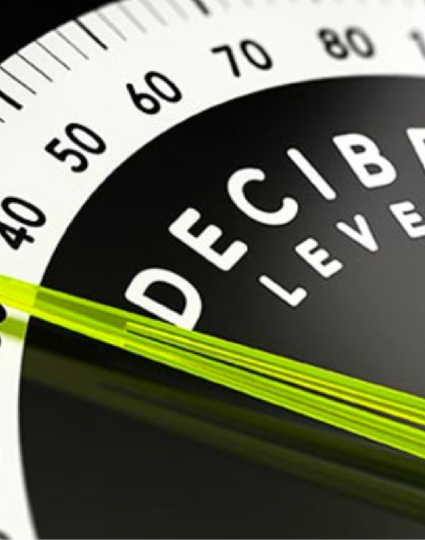
As far as creating acoustical targets (or goals) in restaurants, though the ideal level varies based on the type of the restaurant and/or main clientele, it is generally agreed that the sweet spot for restaurants is between 60 and 65 decibels (dB). This level is low enough to allow for easy conversation and enjoyment of music or other background sounds, but not so low that the atmosphere feels quiet or awkward. A candlelit fine-dining establishment may aim a bit lower, while a lively and energetic place may find slightly higher acceptable.
As with restaurants, bars also have a differing ideal based upon the type of bar it is, and/or the atmosphere the owner is trying to elicit. In general, though, the sound level in a bar should be loud enough to create a lively and energetic atmosphere, but not so loud that it becomes uncomfortable for patrons to hold a conversation, which is a level between 70 75 decibels (dB). This level allows for background music, conversation and other ambient noise to be heard, but does not cause discomfort or hearing damage for the patrons. Some bars and nightclubs prefer even higher sound levels to create a more intense atmosphere, but it should be noted that The World Health Organization (WHO) recommends that sound levels in the workplace, including bars and restaurants, should not exceed 85 dB over an 8-hour period to minimize risk of hearing loss. It s also
worth noting that sound levels above 90 dB can cause hearing damage after just 15 minutes of exposure.
When it comes to designing and/or retrofitting restaurant spaces to be more acoustically comfortable, here are some general considerations and components to sound to pay attention to:
- Absorption: Using sound-absorbing materials like acoustic panels, carpeting, and fabric-covered walls can help reduce noise levels and improve speech intelligibility.
- Diffusion: Using sound-diffusing materials like perforated metal or wood can help reduce echoes and reverberation by scattering sound waves in multiple directions.
- Noise isolation: Using sound-isolating materials like acoustic sealant, weather stripping, and acoustic barriers can help prevent sound leakage between spaces.
- Sound-masking: Using sound-masking systems like white noise generators can help reduce background noise and improve speech intelligibility.
- Lighting: Good lighting can help people see better and avoid collisions, reducing noise from things like spills and broken dishes.
- Furniture: Furniture can be designed to be acoustically friendly, for example, using soft furnishings and upholstery to absorb sound.
- Flooring: Soft flooring like carpet or rubber can absorb sound, reducing noise levels and improving speech intelligibility.
- Kitchen layout: Kitchen layout can be designed to reduce noise levels and improve speech intelligibility.
It s important to note that the best design strategy will depend on the unique layout and characteristics of the restaurant, and consulting an acoustical engineer can help determine the most effective solution. In retrofit applications, the most common and cost-effective changes involve sound absorption, reducing reverberation specifically on the ceiling surfaces, but also on the walls, and then with diffusion in the corners. With that said, we will break down the options for you each surface.
Ceilings considerations:
- Acoustic panels and/or tiles: These are panels or tiles made of sound-absorbing materials, such as foam or fiberglass, that can be mounted on the ceiling to absorb sound and reduce reverberation.
- Suspended sound-absorbing panels or baffles: These are panels made of sound-absorbing materials that are suspended from the ceiling to absorb sound and reduce reverberation. Being that they are hanging, there is greater surface area for absorption, so they boast higher effective NRC values than flat panels.
- Acoustic ceiling clouds: These are clusters of hanging sound-absorbing panels or baffles.
- Canopies or ceiling drapes: These are fabrics that can be hung from the ceiling and base their value on creating air space for sound to travel within.
- Acoustic paint: These are sound absorbing paints that can easily be sprayed on ceiling surfaces.
- Raised floor systems: This is a system that allows creating a plenum space between the existing ceiling and a new suspended ceiling. This space can be filled with sound-absorbing materials to boost the inherent absorption characteristics created by the air space.
Wall considerations:
- Acoustic panels and/or tiles (general): These are panels or tiles made of sound-absorbing materials, such as foam or fiberglass, that can be mounted on the ceiling to absorb sound and reduce reverberation.
- Above booths or high-top tables: Acoustic panels placed above booths or high-top tables can help to create a more intimate and quieter space for diners.
- In front of a stage or band area: Acoustic panels placed in front of a stage or band area can help to control sound reflections and reduce echo, ensuring that the sound quality is optimal for performers and audiences.
- Coverage area: As a starting point or general guideline, restaurants should have no less than 20-25% of the wall areas covered with sound-absorbing materials with an NRC value of 0.7 or higher.
Though there are no federal mandates on acoustic levels in restaurants, there are a number of worthy guidelines based upon the type of sounds being analyzed or remedied:
- Measuring and reporting sound pressure levels in restaurants – ANSI S12.60-2010: American National Standard for Sound and Vibration – Measurement of Sound Pressure Levels in Restaurants and Other Eating Places.
- Conducting acoustical tests in restaurants and other food service facilities – ASTM E1414-11: Standard Guide for Acoustical Testing of Restaurants and Other Food Service Facilities.
- Designing and installing ventilation systems to control smoke, heat, and grease in commercial cooking operations – NFPA 96: Standard for Ventilation Control and Fire Protection of Commercial Cooking Operations.
- Regulations on noise exposure in restaurants (Note: it states that employers must protect employees from noise levels that exceed 85 dBA over 8 hours), OSHA: Occupational Safety and Health Administration. OSHA has.
- Accessibility in restaurants, which must be acoustically accessible for people with hearing disabilities. ADA: Americans with Disabilities Act.
It s important to note that these guidelines may vary depending on the location, use, and type of space, and it is important to consult with the local authorities and building codes for specific requirements.
See Other MODULES:

Join Our Community of Designers and Architects
Register below for your Trade Account and get your samples for free.