
Module #9: Sound in Schools
Module #9
Sound in Schools
Acoustic comfort plays a crucial role in the learning environment of students in school. Much like in the Office environments we looked at in Module #6, noise level, reverberation, and speech intelligibility in a classroom can have a significant impact on how well students learn and retain information. Poor acoustic conditions can lead to negative effects such as decreased concentration, difficulty understanding and following instruction, and even health problems. In this module, we will look at challenges of scholastic environments, the ramifications of poor acoustic conditions to students, as well as general suggestions in an effort to improve school acoustics which can in turn improve student learning, comfort and well-being.
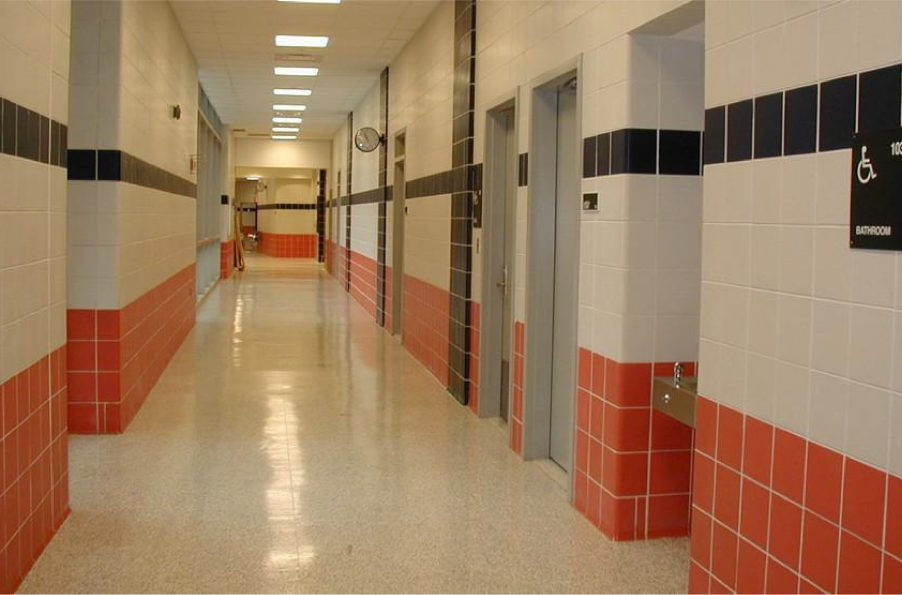
When we look back historically at how schools were built in the past, it seems like little attention was paid to acoustic comfort and how it affected the students’ success within the particular facility. Though most of the challenges relate to noise level and reverberation, here is a list of the main historical culprits:
- High levels of background noise: By design, schools are often located in busy areas, near roads and areas of high density/occupancy, which can result in high levels of background noise. This can make it difficult for students and teachers to hear and communicate effectively.
- Reverberation: Many older school buildings were designed with hard surfaces such as concrete and tile (sadly, a lot of which was asbestos), which leads to excessive reverberation and makes it difficult for students and teachers to understand speech.
- Poor sound insulation: Typically, older schools were not designed with adequate sound insulation between classrooms and other spaces, which can result in noise from one area spilling over into another.
- Lack of sound-absorbing materials: most schools were not designed with sound-absorbing materials such as carpeting and acoustic ceiling tiles, which can help to reduce reverberation and improve speech intelligibility.
- Inadequate ventilation: many schools were built with ineffective ventilation which clearly can affect physical comfort, it can lead to high humidity and other environmental factors that can affect speech intelligibility.
Though these challenges are now known and being addressed in the design and building of new schools, the number of schools that need renovations and retrofits to remedy these issues is still quite staggering.
The factors and challenges referenced above have a profound effect on students’ ability to learn. Though many of the issues we will analyze here are common in all areas where the acoustics are bad, we will briefly highlight them, along with supplemental reference data highlighting specific studies leading to the conclusion being presented.
Noisy learning environments can cause:

- Decreased concentration: A 2010 Acoustical Society of America’ study found that poor acoustic conditions in schools can lead to decreased concentration, difficulty understanding and following instruction, and health problems such as headaches and fatigue ( The Acoustic Environment in Schools and its Impact on Childrens Learning and Health by Margaret E. Kruger). Another study found that high levels of noise and reverberation in classrooms can negatively impact student concentration and learning ( The impact of noise and reverberation on student concentration and learning by J.F. Schouten, et al, 2016).
- Inability to follow direction: A 2008 study found that poor acoustic conditions in classrooms can negatively impact speech intelligibility, making it difficult for students to understand and follow instruction. ( The impact of classroom acoustics on speech intelligibility by D.A. Houtgast and T. Steeneken).
- Decrease in reading comprehension: A 2015 study found that exposure to environmental noise, such as traffic noise, can negatively impact reading comprehension in children. ( The effect of environmental noise on reading comprehension by J.J. Stansfeld, et al).
- Increased absenteeism: A study in the Journal of the Acoustical Society of America found that poor acoustic conditions in classrooms can lead to decreased student learning and increased absenteeism due to health problems. ( The Impact of Classroom Acoustics on Student Learning by David Lubman and Richard Dowell 2006).
- Lower test scores: Another study found that poor acoustic conditions in classrooms, such as high background noise levels and echoes, can negatively impact student learning by reducing concentration, increasing frustration, and lowering test scores. ( The impact of classroom acoustics on student learning by S.J. Raza, et al, 2013).
- Decreased cognitive development: Another study found that exposure to high levels of noise, such as traffic noise, can negatively impact cognitive development in children. ( The relationship between noise and childrens cognitive development by G.J. Evans and L. Maxwell, 2011).

Though these challenges are now known and being addressed in the design and building of new schools, the number of schools that need renovations and retrofits to remedy these issues is still quite staggering.
The factors and challenges referenced above have a profound effect on students’ ability to learn. Though many of the issues we will analyze here are common in all areas where the acoustics are bad, we will briefly highlight them, along with supplemental reference data highlighting specific studies leading to the conclusion being presented.
Noisy learning environments can cause:
With the goal of addressing the known issues with acoustic comfort in schools and classrooms, there are several design strategies that can be used to improve acoustics in schools:
- Incorporate sound-absorbing materials: Incorporating sound-absorbing materials such as acoustic ceiling tiles, wall panels, and floor coverings can help to reduce echoes and reverberation, and improve speech intelligibility in classrooms.
- Implement sound isolation measures: Implementing sound isolation measures such as soundproofing walls and doors can help to reduce noise pollution from outside sources and other classrooms.
- Control background noise: Designing the HVAC system to control background noise and using noise-reducing equipment and appliances can help to reduce overall noise levels in the school.
- Use natural materials: Incorporating natural materials such as wood, cork, and plants can also help to improve acoustics by reducing echoes and reverberation.
- Proper room layout: Properly arranging furniture and equipment within a classroom can also help to improve acoustics. For example, placing desks and chairs in an arc pattern can reduce echoes and improve speech intelligibility.
- Use of sound-masking devices: Using sound-masking devices can help to reduce noise pollution and improve speech intelligibility by adding a background noise that covers up distracting sounds.
- Acoustic ceiling systems: Acoustic ceiling systems are very effective in reducing reverberation and echoing, they can also help to improve speech intelligibility, and increase the overall acoustic comfort of the space.
- Window treatment: Using window treatments such as curtains, blinds or shades can help to reduce external noise from entering the classroom and improve the overall acoustic comfort.
In addition to looking at the basic suggestions as provided above, it is important to realize that every school is different and may have different acoustic issues. To get the bottom of it, the best course of action and ongoing procedures should be to consider the following:
- Hire an acoustic expert to provide site-specific recommendations.
- Incorporate sound absorbing materials where applicable and as needed.
- Work to isolate the room(s) from incoming noise pollution (whether from outside or adjacent areas), while trying to control all background noise to suitable levels.
- Arrange the furniture in the room(s) in such a formation that they diminish echoes and reverberation.
Relative to guidelines and code considerations for sound within schools, though there are no existing federal mandates requiring certain facilities or types of rooms to have set acoustic values (as a maximum), there are a lot of useful resources to guide one on their school design/retrofit challenges:
American National Standards Institute (ANSI):Limited space and budget:
S12.60 2002 – provides guidelines for the design and construction of educational facilities to ensure that the acoustical environment is appropriate for the intended use.
S12.60 2010 (American National Standards Institute: American National Standard for Acoustical Performance Criteria, Design Requirements, and Guidelines for Schools) – gives a comprehensive set of design requirements and guidelines for school acoustics.
American Society of Heating, Refrigerating, and Air-Conditioning Engineers (ASHRAE) – provides guidelines for the design of HVAC systems to control background noise and improve speech intelligibility in classrooms. (Standard 62.1-2016).
National Council of Architectural Registration Boards (NCARB) guidelines – provides recommendations for the design and construction of educational facilities to ensure that the acoustical environment is appropriate for the intended use.
International Building Code (IBC) 2018:- provides guidelines for the design and construction of new buildings to ensure that the acoustical environment is appropriate for the intended use.
American Society for Testing and Materials (ASTM) – provides standard for sound transmission loss of building partitions and elements (ASTM E90-16).
In the next Module we will be looking at sound in hotel environments analyzing the challenges, the realities, and ways to improve the acoustic comfort within them.
See Other MODULES:






Join Our Community of Designers and Architects
Register below for your Trade Account and get your samples for free.