
Module #2: Wavelength, frequency and reverberation time of sound – and why it matters
Module #2
Wavelength, frequency and reverberation time of sound – and why it matters
Wavelength
of sound is the distance between two consecutive peaks (compressions) or troughs (rarefactions) of a sound wave in a medium (usually air), and it is typically measured in meters (m) or centimeters (cm).
Note: Interesting fact: In air, the speed of sound is approximately 343 m/s (at 20°C) and is affected by temperature, humidity, and atmospheric pressure.
Frequency
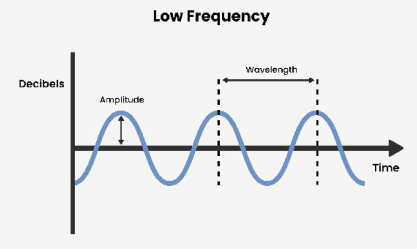
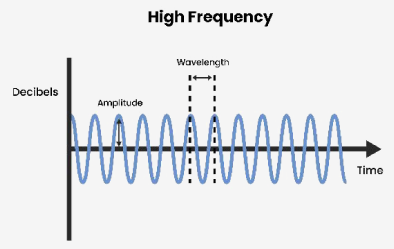
The wavelength of sound can be calculated by dividing the speed of sound in a medium by the frequency of the sound, and it is inversely proportional to the frequency of the sound, meaning that as the frequency increases, the wavelength decreases. Longer wavelengths indicate lower frequency sounds and typically travel in a more diffuse manner, while shorter wavelengths indicate higher frequency sounds and typically travel in a more focused manner.
The wavelength of a sound also helps to determine the type of sound and its characteristics. For example, long wavelength sounds are perceived as bass or low-frequency sounds, while short wavelength sounds are perceived as treble or high-frequency sounds.
- Sound of thunder (created by the shock wave produced by lightning), or a large explosion.
- Sound of a large diesel engine.
- Bass notes in music: Bass notes in music are typically low frequency sounds that are felt more than heard, and they can be produced by bass guitars, drums, synthesizers, and other instruments.
- Sound of large animals: Some of the largest animals, such as elephants, whales, and hippopotamuses, produce low frequency vocalizations that can travel great distances.
- Earthquakes: Earthquakes generate low frequency sounds as they cause the ground to vibrate at very low frequencies.
High-frequency sounds:
- Sound of a whistle (created by vibration of air passing through a small opening) or a bird chirping.
- Sound of a dog whistle: A dog whistle produces a high frequency sound that is outside the range of human hearing but can be heard by dogs.
- Sound of a mosquito buzzing: The high-pitched buzzing sound of a mosquito is a result of the rapid flapping of its wings.
- Sound of a musical triangle: The high-pitched ringing sound of a musical triangle is due to the high frequency vibrations of the metal.
- Sound of a screaming child: A child’s scream often has a high-pitched, piercing quality due to the tension and tightness in their vocal cords.
Low-frequency sounds:
Interesting thought:
have you ever been driving down the road, and a block away you hear the bass emitting from a car? You hear the thump of the ‘hip-hop’, but not the Taylor Swift lyrics! The reasons for this are:
- Directionality: Lower frequency sounds have longer wavelengths and are more omni-directional than higher frequency sounds, meaning these low frequency sound waves can spread out in many different directions and be heard from a greater distance, while higher frequency sound waves are more directional and tend to be absorbed or reflected more easily.
- Reflection and Diffraction: Low frequency sound waves can diffract and bend around obstacles more easily than higher frequency sound waves, meaning they can travel further without being absorbed or reflected by the environment. In a car, the lower frequency sound waves can reflect off the interior surfaces of the car and diffract around obstacles outside the car, helping them to propagate further
- Acoustics of the Car: The enclosed space of a car creates an acoustic environment that can enhance the low frequency sounds. The car acts like a resonant cavity, with the surfaces of the car reflecting and amplifying certain frequencies. The shape and materials of the car can influence which frequencies are amplified, with lower frequency sounds often being amplified more than higher frequency sounds.
We would be remiss to not define and explain reverberation time, which is critical in understanding the quality of sound based on the application or use of the space.
Reverberation time (also known as Rt60) – the amount of time it takes for the sound energy to decrease by 60 decibels (dB) after the sound source has abruptly stopped. These rates are affected by the size, shape, and acoustical properties of a room, as well as the materials used in its construction.
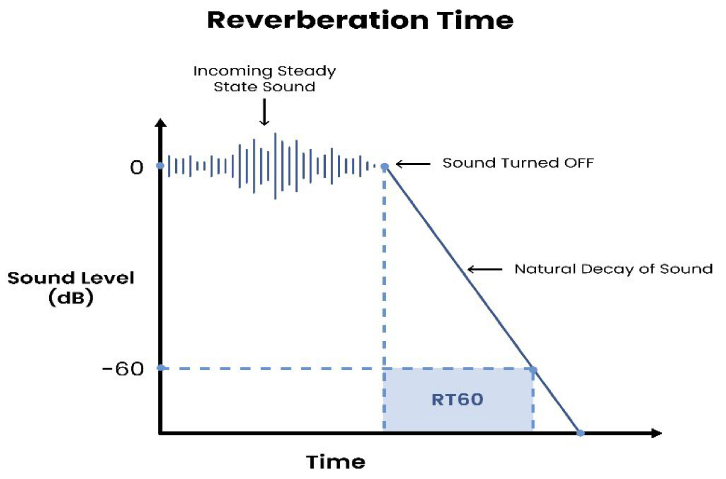
Reverberation time is an important characteristic of a room’s acoustics, as it can have a significant impact on the perceived sound quality in the space. A short reverberation time is generally considered to be desirable in spaces such as concert halls, where speech intelligibility and clarity of music are important. In contrast, a longer reverberation time is generally considered to be desirable in spaces such as churches or other religious buildings, where a sense of spaciousness and a sense of a “live” room is desired.
Reverberation time can be measured using impulse response techniques, such as the impulse response measurement, which involves measuring the response of a system to a brief, intense sound, such as a clap. The impulse response measurement can be used to evaluate the reverberation characteristics of a room over a very short amount of time, and then enable the optimization of the acoustical properties of a space. The reverberation time can be modified by adding sound-absorbing materials to the room, such as curtains, carpets, or sound-absorbing panels, or by adjusting the shape and layout of the room.
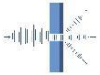
As you can see, the wavelength of sound affects the way sound behaves, and how it interacts with surfaces and objects it meets, which then affects Reverberation time, and how the sound is physically perceived. As we learned in Module #1, sound is affected by and through absorption, diffraction, diffusion, reflection, refraction, and transmission.
Absorption


Diffusion

Refraction
Though the importance of sound measurements and their results can vary depending on the context in which they are taken, and what is physically being measured (loudness, specific frequency content, quality, and reverberation characteristics), here are some common reasons why measuring and understanding sound is important:
-
Health and safety:
To monitor and control sound levels in the workplace to prevent hearing damage and ensure compliance with occupational health and safety regulations. -
Quality control:
To evaluate and maintain the quality of audio equipment and sound systems. curtains, carpet, and upholstered or acoustic furniture, can help control reflections and reduce reverb. -
Acoustics:
To design and optimize soundproofing and sound-absorbing materials and structures, such as concert halls and recording studios. -
Environmental monitoring:
To measure and monitor noise levels in the environment and assess their impact on wildlife and communities. -
Medical diagnosis:
To diagnose and monitor hearing problems and balance disorders using audiometry tests.
Here are some specific sound measurement examples based on application or space type:
-
Musical recording studio:
can be used to optimize the sound quality and ensure that the recordings are of the highest possible quality. -
Industrial setting:
can be used to assess potential noise pollution and to ensure that noise levels are within safe limits for workers. -
Residential or commercial setting:
can be used to assess the sound insulation of a building and to identify any potential sources of noise pollution. -
Medical setting:
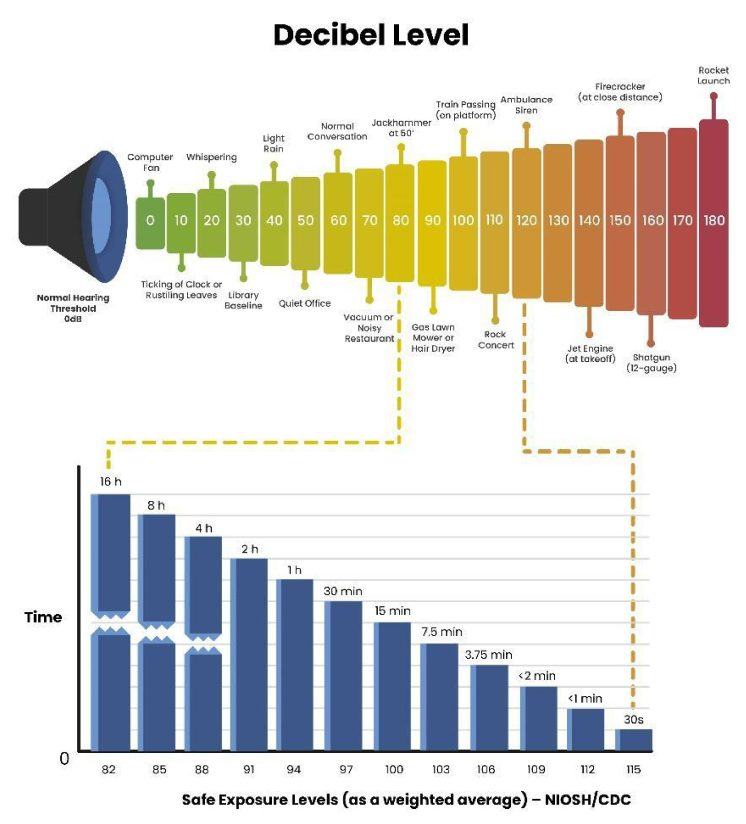
can be used to assess the risk of noise-induced hearing loss in a workplace and to implement appropriate measures to protect workers, as it has been shown that prolonged exposure to loud noise can lead to hearing loss and other health problems.
Overall, sound measurements are important because they allow us to understand the characteristics of sound, and how it behaves in different environments, which can help us to optimize sound quality, ensure safety, and protect people from potential health risks.
See Other MODULES:
Join Our Community of Designers and Architects
Register below for your Trade Account and get your samples for free.